I bet you figured I was done with my Top Ten Favorite comic stories once I hit number one. Shows what you know! Seriously though, I thought I would briefly touch on a few more comics I love that didn't make the cut and why they didn't.
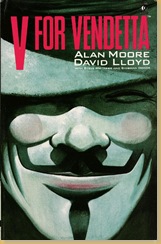 V for Vendetta
 : I have to admit I like this book a lot. Alan Moore and David Lloyd's create a complex morality play. The protagonist is V, a terrorist waging a one man war against an England that has become a complete fascist state.
V for Vendetta raises more questions than it answers. V does many unconscionable things. His treatment of Evey is horrific, even if it does help her reach a new level of enlightenment. But that is sort of V's point. He is born to tear things down, not build things up. That is a task he leaves for his successor.
As to why it didn't make the list... well, honestly I can't say why. Partially, its because I felt the list was starting to become "My Top Ten Alan Moore" stories. Also, I felt that it was too similar to Watchmen, which was on the list already.
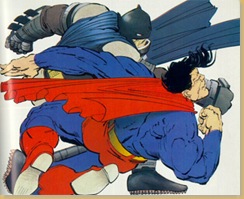 Batman:Year One and Batman: The Dark Knight Returns by Frank Miller:
Batman: Year One is frankly one of the best retellings of Batman's origin story. It almost makes the whole "dress up like a bat to scare criminals" shtick look like the only logical course for Bruce Wayne.
Batman: The Dark Knight Returns is the story of a long since retired aging Batman taking up the mantle again. The world has changed though, and Batman is branded a violent vigilante who must be brought down.
Between the two of them, Frank Miller helped to redefine Batman for a new generation of comic book readers. So why didn't they make my list? Mostly because I felt Frank Miller's Daredevil: Born Again was a better example of this kind of deconstructive storytelling.
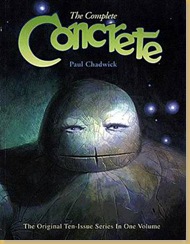 At least one commentator has wondered why Paul Chadwick's Concrete series was not on the list. I am a big fan of the Concrete series, which might be best described as a superhero comic without the superheroics.
Concrete is the story of a man who is abducted by aliens and finds his mind transplanted into a nigh indestructible cyborg body. However, rather than decide to try to save the world by punching out bad guys, he uses his newfound fame to become a writer and use his words to elicit change.
Most of the drama in Concrete comes from his feelings of alienation and the fact that he has to deal with the all too fragile world around him. He cannot have a physically intimate relationship with the woman he loves. His strength and weight make him unable to sit in normal chairs or even dial a phone without breaking it. Concrete is not bitter though, more wistful and melancholy as he tries to make the best of the hand life has dealt him.
So why didn't it make the list? Well, even though I am a fan of Concrete, I do tend find the book a bit to preachy for my tastes. Also, Paul Chadwick's political views fall quite a bit left of mine, and mine are pretty left already. Still, if I had put together a top twenty list, I am sure it would be on it.
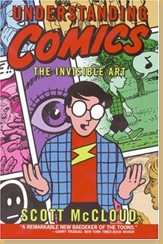 Understanding Comics: The Invisible Art by Scott McCloud literally changed the way I looked at comic books, manga, and animation. It is probably the most in-depth look at the mechanics of how comics work ever created.
This comic about comics is so good, it's almost impossible to describe to someone who hasn't read it. It is especially impressive because Scott McCloud has to create an entire nomenclature to discuss comic in a scholarly manner, since it has never been done in such depth before. Nevertheless, it is a relatively easy read, since Scott manages to inject a lot of humor into what would otherwise be a rather dry subject.
The only reason Understanding Comics didn't make it on my Top Ten Favorite Comic Stories is that it is not technically a story.
 Kingdom Come by Mark Waid and Alex Ross: Set in the future of the DC Universe, most of the old generation of superheroes have retired and have been replaced by a newer and more violent breed. When Kansas is irradiated and rendered uninhabitable by their antics, Superman comes out of retirement and reforms the Justice League to police these new heroes.
However, in the attempt to restore order, the Justice League begins to trample over the very freedoms they are trying to protect. This is a familiar theme in comic books, I can't call Kingdom Come the most original story. Still, between the amazing artwork by Alex Ross and the sense of grandeur imparted by Mark Waid's storytelling, this story has never been told better.
As to why it isn't on the list, it is mostly because it shares too many similarities with Marvels.
Tomorrow, I will look at a few other great comic books that didn't make the list.


